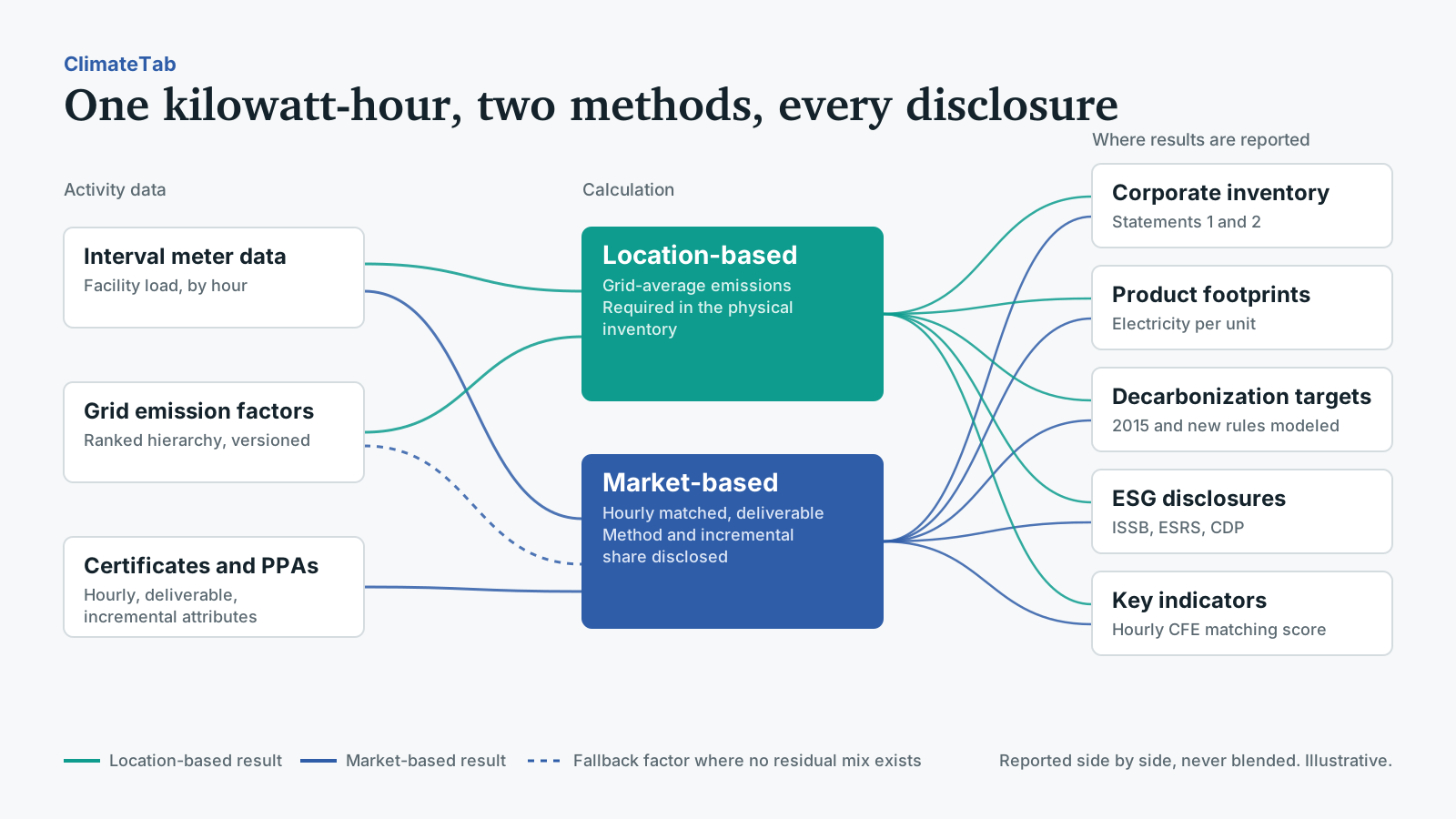
The revised GHG Protocol Scope 2 standard is moving away from a single emissions number toward a set of linked statements. Under the direction agreed at the October working group workshop, location-based results anchor the required physical inventory. Market-based results sit in a separate market-based inventory, consequential impacts go in a GHG impact statement, and metrics such as an hourly carbon-free energy matching score appear as key indicators. Stakeholders have made support for this structure conditional on one rule: the statements must never be netted or blended. Every number has to be traceable to the method that produced it.
That raises the bar for calculation. Market-based results would depend on hourly matching and on certificate attributes such as asset age, offtake terms and deliverability boundary. During the transition, companies would have to disclose whether each result uses the 2015 rules or the new method, along with their hourly-matched share. Coverage will be partial for most companies for years: some markets will have hourly registries and others won’t, and the working group is still weighing whether gaps should be filled with location-based or fossil-only proxies. Location-based reporting also becomes more rigorous, with a ranked, auditable emission-factor hierarchy. Working group members specifically warned that location-based and market-based activity data must stay consistent so that exemptions don’t create gaps.
For companies, this means the same kilowatt-hour has to produce both results, and both have to flow consistently into corporate inventories, product footprints, decarbonization targets and ESG disclosures. If a product claim draws on a different electricity basis than the corporate inventory, auditors will catch the mismatch. That’s the principle behind ClimateTab: one activity-data backbone, both methods calculated side by side, and each result labeled by method wherever it’s reported. Timing matters as well. The largest electricity users could be reporting on the new basis for 2030 data, and one working group estimate puts broad US hourly-registry readiness three to five years after the standard is final. The data infrastructure needs to be ready before the registries are.

